International Women's Day: An Inteview with Anabela Pinto from Bondalti
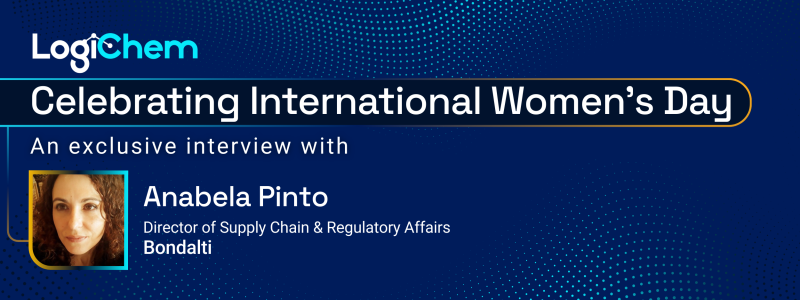
Can you tell us about your career journey so far? What first drew you to the supply chain and chemicals industry, and how did you progress to your current role?
From an early stage, I was fascinated by how supply chain works as a company’s “nervous system”: it connects people, processes, and technology to ultimately deliver to the customer with quality and safety. I have a degree in Chemistry and started my career as a key user in the implementation of an SAP system at a company in the sector. It was a demanding, very hands-on school where I understood the importance of well-designed processes, data quality, and operational discipline. In an industry like chemicals, there is no room for improvisation.
Later, I worked in a Marketing role integrated in the Commercial Direction. That experience was decisive because it gave me a business perspective and a customer focus: I understood the real impact of a delay, or an order change. The combination of technical rigor and customer orientation naturally led me to roles with greater responsibility.
An important milestone was the challenge of restructuring the Purchasing area and, later, integrating Logistics and Product Regulation into a single Supply Chain vision. The goal was to reduce complexity and build analytical capability to make decisions quickly and consistently and, in the end, a better service to the customer.
What attracts me to the chemical industry is precisely the fact that it is complex and demanding, but also essential to so many other activities. We manage critical flows, ensure quality and safety, deal with regulatory requirements, and respond to sustainability pressure. It’s a context where you feel your work has impact. Today, I lead Bondalti’s supply chain with the same ambition: to do more and do it better—with efficiency, compliance, and, above all, a customer focus.
Looking back, were there any defining moments, challenges, or opportunities that had a significant impact on your career path or leadership style?
Working in the chemical sector means living with constant cycles and shocks: price and energy volatility, geopolitical events, logistics disruptions. Those moments taught me a golden rule: we may not have all the information, but two things are non-negotiable - safety and compliance. From there, everything else can be organized.
The pandemic was another turning point. Beyond the operational impact, it forced us to change working models overnight, with teams at home, new routines, and new vulnerabilities, including family-related ones. We created simple gestures that helped maintain cohesion - such as the online “five o’clock coffee” on Fridays, with no work talk, just to stay connected. It was also when I realized that leading is not always having the answers, but creating clarity in the noise, setting priorities, protecting what is essential, and helping the team focus on what they can control. Under pressure, solutions and innovation often emerge—as we saw with the acceleration of digitalization and, more recently, decarbonization projects.
Another defining challenge was leading in settings where diversity in leadership has historically been limited. That experience sharpened my ability to bring clarity, align stakeholders, and create an environment where the best ideas prevail through evidence and performance. Today I would summarize my leadership style in three words: resilience, collaboration, and continuous learning.
As a leader, how do you foster a positive and inclusive work culture within your teams?
Culture shows up in the small, everyday moments - not in what we print on posters. For me, building a positive and inclusive Supply Chain team starts with leading by example.
I try to lead with Integrity and trust: being transparent, fair, and consistent, especially under pressure. People need to know they can rely on each other, that decisions are made with equity, and that we learn from mistakes - anticipating problems and working collaboratively to improve.
Supply Chain only works when we combine individual accountability with strong teamwork to build Competence. I focus on clear priorities, disciplined execution, and high standards, because in our industry quality and safety are non-negotiable.
At the same time, I want people to feel comfortable questioning, improving, and challenging the status quo. That’s where *Innovation* comes in: encouraging curiosity, using data to make better decisions, and creating space for new ideas - whether it’s a process improvement, a digital tool, or a more sustainable way of working.
I’ve also learned that performance is only sustainable when people feel respected and supported. So I invest time in coaching, giving autonomy, developing skills, and making sure different voices are heard - with a strong focus on team development.
Finally, Responsible Action is the backbone of everything we do. Every day, we uphold high standards in quality, safety, and environmental responsibility, while creating value for the communities around us. For me, inclusion is part of that responsibility: protecting what matters, building stronger teams, and ensuring talent can thrive - because that’s how we deliver better results, in the right way.
Why are DEI initiatives important to you personally, and how is this a regular part of your day-to-day role at Bondalti?
DEI matter for two reasons: because it is the right path and because they improve performance. In supply chain we deal with change every day, and diversity improves decision quality: it brings different perspectives, reduces blind spots, and forces us to challenge assumptions.
In day-to-day practice, DEI translates into practical choices: how we recruit, how we evaluate, who gets development opportunities, who participates in critical projects, and who we prepare to lead. It also means creating an environment where people can be recognized for their merit and impact.
As a woman in a sector still shaped by masculine structures, I feel a responsibility to show that it’s possible to combine high standards with humanity, ambition with balance, leadership with collaboration. Above all, to show that inclusive teams are stronger and better prepared to handle complexity.
From your perspective, how is work culture changing across supply chain and logistics, and what progress are you most encouraged by, especially for women in the industry?
Work culture in supply chain is changing quickly. On one hand, there’s a clear shift toward digitalization and data discipline. Managing complex supply chains requires visibility and speed: performance indicators, integrated systems, and the ability to anticipate - not just react.
There’s also a move toward simpler communication and a stronger customer focus. Less noise and fewer silos mean faster responses and more consistent service. This isn’t just efficiency - it’s culture, and it requires real cross-functional collaboration.
In addition, there is increasing pressure around sustainability and decarbonization, which is redefining priorities and skills. Supply chain is no longer only about “getting products there”; it’s also about getting them there “better,” with lower impact and greater responsibility.
As for women, I’m encouraged to see more presence in operational and coordination roles, because that’s where the leadership pipeline is built. Progress happens when there are visibility and real opportunity. There’s still a path ahead, but change is tangible: more women in operations, more diverse teams, and greater awareness that talent has no gender.
For women who are earlier in their careers or aspiring to leadership roles in supply chain, what advice would you share based on your own experience?
I would leave four very practical pieces of advice:
Invest in continuous learning. Supply chain is increasingly driven by technology and data. Skills like data analytics, sustainability, and risk management make a real difference today. Look for development programs, training, and certifications - and whenever possible, don’t limit yourself to a single area. Experience in operations, planning, and purchasing provides a holistic view that accelerates leadership maturity.
Build your network. Mentors and allies are essential, inside and outside the company. Participating in industry initiatives, events, and professional communities helps you gain references and confidence.
Develop your voice. Preparation, clarity, and consistency are the best ways to take up space: share ideas, ask questions and lead with purpose.
Choose environments where you can grow with quality. Companies with real practices around diversity, development, and work–life balance aren’t “a nice-to-have”; they are a career sustainability factor. In the end, leadership isn’t about doing everything - it’s about creating the conditions for the team to deliver, grow, and become more resilient. And when a woman reaches leadership that way, it’s not just a personal win: it opens doors for other.
We are thrilled to be celebrating International Women's Day with some of our inspiring female speakers, you can listen to their industry insights in Rotterdam this March! Click here to register.